


Should You Buy an Annuity? Ask This Question First
If you've spent any time planning for retirement, you've probably heard someone discuss an annuity.
Some people swear by them.
Others avoid them entirely.
The reality is more nuanced.
Annuities aren't inherently good or bad. Like many financial tools, their value depends on how—and why—they're used.
Recently, I received a voicemail from someone introducing a new annuity product. The first thing she highlighted wasn't the planning benefits.
It was the commission.
This told me her priorities were not likely to be aligned with mine.
I didn’t call her back.
Her focus raised a more important question than whether the product itself was good.
Why is this recommendation being made?
Annuities Are Tools—Not Universal Solutions
Annuities can serve a legitimate purpose in retirement planning.
Depending on your circumstances, they may help:
- Create guaranteed lifetime income
- Address longevity risk
- Protect a portion of assets for conservative investors
- Support certain charitable or estate planning strategies
For the right person and the right situation, an annuity may be an appropriate part of a comprehensive financial plan.
The important point is that the recommendation should begin with your goals—not the product.
Why Incentives Matter
Compensation structures influence behavior.
That doesn't mean every commission-based recommendation is inappropriate.
It does mean incentives deserve to be understood.
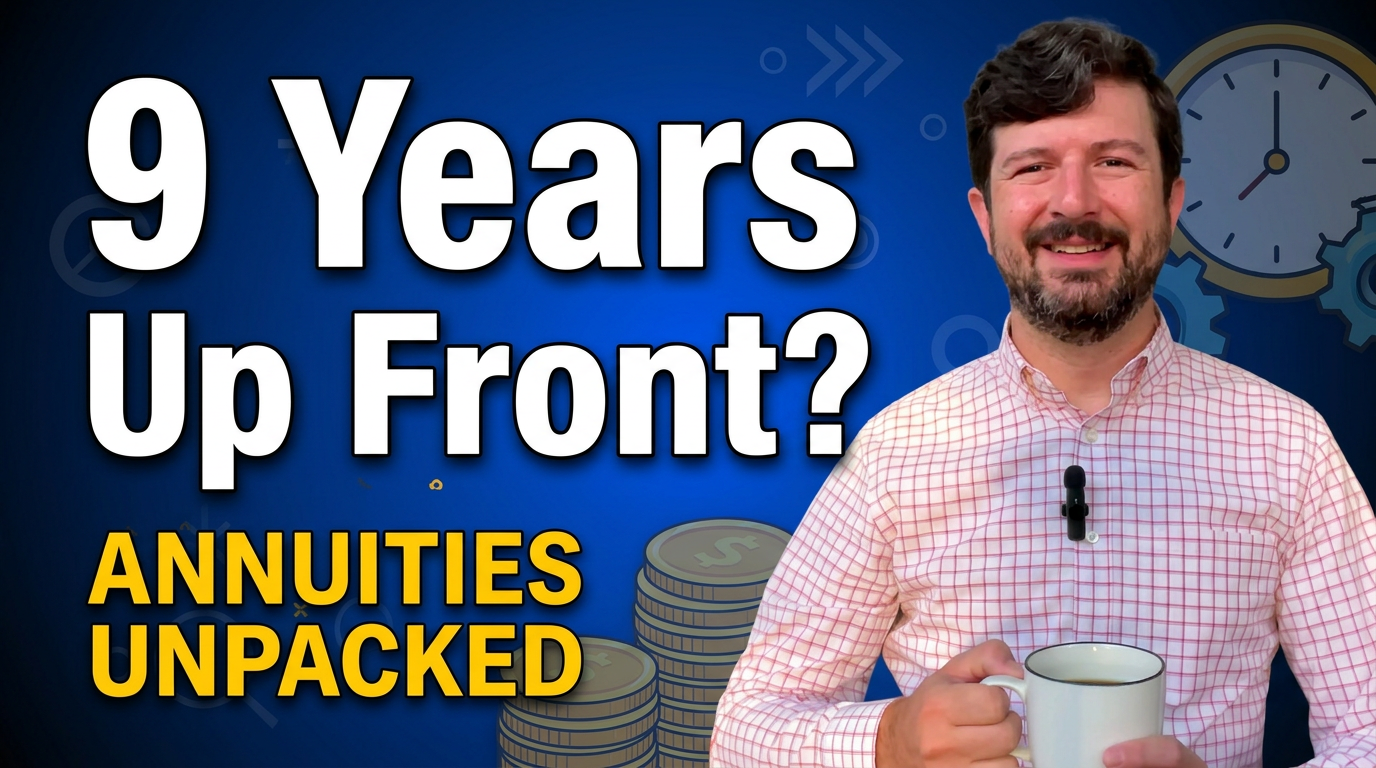
In the voicemail I received, the product reportedly paid a 9% commission.
To put that into perspective, if an advisor charges approximately 1% annually for ongoing investment management and planning, it could take roughly nine years of serving a client to generate the same amount of compensation.
That doesn't automatically make the annuity recommendation wrong.
It simply highlights why it's important to ask thoughtful questions whenever compensation is heavily front-loaded.
The best financial advice should be driven by planning—not by payouts.
Complexity Isn't Always Your Friend
Many annuities include features that aren't immediately obvious.
Depending on the contract, they may involve:
- Surrender periods
- Surrender charges
- Multiple layers of fees
- Optional riders which may conflict with each other
- Income guarantees with specific limitations
- Complex contract language
These products often require careful review before making a long-term commitment.
I've even seen situations where years later there was disagreement about how certain contract provisions should be interpreted.
That's not the kind of uncertainty most retirees want.
Simplicity Often Ages Well
Good financial planning doesn't always require complicated solutions.
Sometimes it does.
Sometimes it doesn't.
The goal isn't to make your financial plan more sophisticated.
The goal is to make it more effective.
Many of the best long-term planning decisions are surprisingly simple because they're built around your objectives rather than the newest product available.
Should You Get a Second Opinion?
If you've recently been presented with an annuity, don't assume it's automatically right—or automatically wrong.
Instead, ask questions like:
- What specific planning problem does this solve?
- Are there simpler alternatives?
- What fees or surrender charges apply?
- How does this fit within my overall retirement income strategy?
- How is the advisor being compensated?
A second opinion isn't about criticizing another advisor.
It's about making sure an important financial decision aligns with your long-term goals.
Frequently Asked Questions
Are annuities bad investments?
Not necessarily. Annuities can provide meaningful benefits in certain retirement planning situations. Whether they're appropriate depends on your objectives, the contract's features, and how they fit into your broader financial plan.
Are annuities that pay commissions always bad?
Some annuity products compensate advisors with an upfront commission. While that doesn't automatically make a recommendation inappropriate, it's important to understand how compensation works and ensure the product is being recommended because it meets your planning needs.
When does an annuity make sense?
An annuity may be appropriate for investors seeking guaranteed income, protection against longevity risk, or certain specialized planning strategies. The decision should generally be made in the context of a comprehensive retirement plan.
Should I get a second opinion before buying an annuity?
While this is certainly not necessary, we believe it is wise to do so. An annuity is often a long-term commitment, and reviewing the recommendation with an independent advisor can help you better understand the benefits, trade-offs, and alternatives.
Final Thoughts
Annuities aren't the problem.
Incentives aren't automatically the problem either.
The key is making sure the recommendation begins with your financial goals—not the product being sold.
Every financial tool has a place when it's used for the right purpose.
If you're considering an annuity or already own one and would like an independent review, I'd be happy to discuss how it fits within your overall retirement plan.
Clarity is just a conversation away.
Investment advisory services are offered through CapSouth Partners, Inc, dba CapSouth Wealth Management, an independent registered Investment Advisory firm. Information provided by sources deemed to be reliable. CapSouth does not guarantee the accuracy or completeness of the information. This material has been prepared for informational purposes only and is not intended as specific investment, tax or legal advice. CapSouth does not offer tax, accounting or legal advice. Please consult your tax or legal advisor to discuss your specific situation before making any decisions that may have tax or legal consequences.